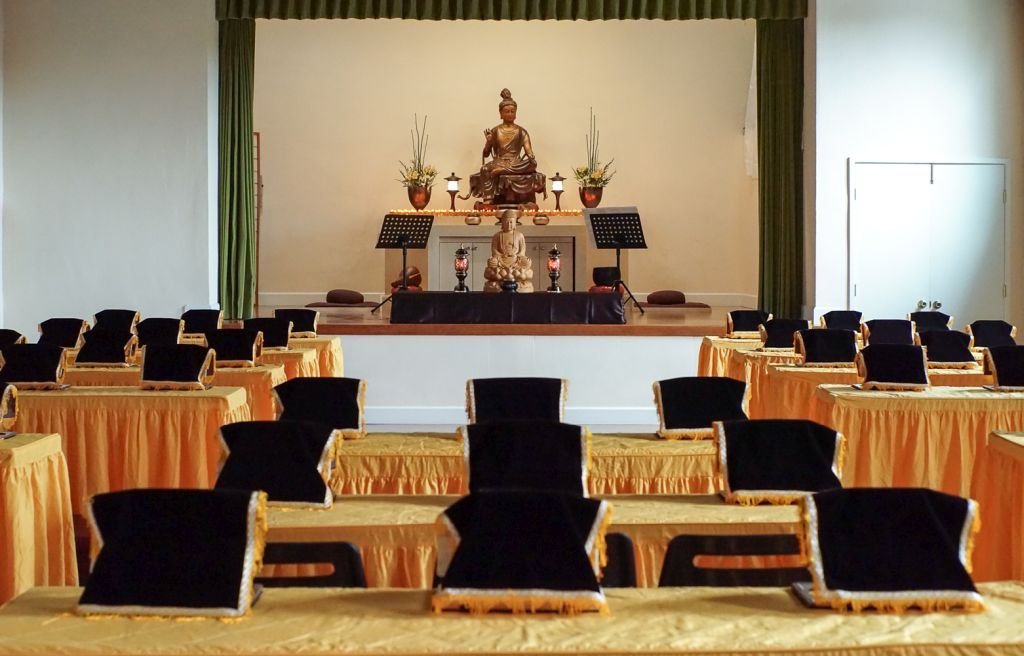
The primary distinction between group practice and individual practice is that group practice fosters a collective sense of discipline, which prevents us from becoming too lax through external restraints. People have an inherent tendency toward laziness—if no one pushes us, we might think it’s fine to slack off or relax. This mindset is natural, but the discipline of group practice can push us forward, so we can practice more diligently.
Group practice only instills discipline through external structure, while the application of methods ultimately depends on the individual’s effort. This is why individual practice is still essential. For example, in group chanting, there is a strong sense of connection between people and collective resonance. In group meditation, although it is done collectively, the actual effort is still made individually because meditation requires gathering the mind inward. Thus, the purpose of group practice is to utilize the power of the collective discipline to enhance and solidify individual practice.
In monastic communities, often called “forest monastery,” different monastics live together, sharing meals and lodging every day. As long as one is still an ordinary person, there will always be afflictions wherever people gather. When afflictions arise, people inevitably “rub” against each other. Take cleaning potatoes as an example. When you have many potatoes, you can toss them into the water and stir them vigorously with a large stick. As they bump and rub against the others, their rough skins gradually wear away.
Group practice functions similarly—everyone has their rough edges, and through daily interactions, we inevitably step on each other’s toes or cross each other’s boundaries. If someone can endure this process, it means their rough edges have been smoothed. Those who cannot endure it will naturally leave the monastic community, which resembles the process of natural selection. Thus, in addition to promoting diligent practice, group practice also offers this benefit.
Some people feel that being in a large community imposes too many restrictions. To uphold the image and discipline of the group, certain actions are prohibited, which they may find rigid or inefficient, making them reluctant to stay. Some monks, though still ordained, do not live in the monastic community because they prefer the freedom of choosing their own practice methods and lifestyle. However, this comes at the cost of missing the refinement that group practice provides in smoothing out one’s rough edges.
On the other hand, some individuals can practice alone effectively—meditating on time, eating on time, sleeping on time, all in a peaceful and stable manner. However, when they leave their secluded environment and engage with others, problems arise. While they may remain calm and composed in solitary meditation, they lose their temper in social interactions. Why is that? They lose their temper, succumbing to greed, anger, and delusion.
One advantage of group practice is that it tests the authenticity of our progress. Is the cultivation merely superficial or can it withstand external challenges? When faced with difficulties, in order to accomplish something or achieve a goal, we may need to make compromises. We must consider whether to prioritize personal dignity or the success of the task. These are important questions to reflect upon.
If we can meditate well but still react with anger and frustration in social interactions, we should question what our meditation practice is truly doing for us. Has the practice improved my character and my daily life? Interacting with others can serve as a way to examine ourselves.
Additionally, how do others feel when they interact with me? We may see ourselves as good people, but others may not always share the same perception. Some people bring warmth and joy when they arrive, while others bring relief only when they leave. It’s important to reflect on what kind of person we are.
Thus, while group practice has its benefits, true practice requires us to collect our mind, contemplate, and observe inward. In other words, both group practice and individual practice are necessary.