Many years ago, Venerable Chi Chern led a Chan retreat during the summer session for the monastics at Dharma Drum Mountain (DDM). He knew that the monastics at DDM were very busy and being busy meant being very tired. So, during the first few days of the retreat, he would tell us: “If you’re busy, if you’re tired, and if you feel sleepy—then sleep!” Why would he say that? Because when you’re too tired, you simply can’t practice effectively. Instead of forcing yourself to sit there struggling, it’s better to sit and rest properly. However, this kind of rest comes with conditions.
What kind of conditions? You must rest with proper posture. Avoid slouching or collapsing into a hunched position that suggests you’re giving up—this is strongly discouraged. When the upper body slumps forward and you fall asleep in that posture, your airways become restricted. This reduces oxygen intake and can lead to a kind of drowsiness with clouded consciousness brought on by oxygen deprivation.
While all sleep involves a degree of reduced consciousness, sleep in a curled-up, constricted position fails to restore energy. In such a state, no matter how long you sleep, you’ll continue to feel drowsy. When the next meditation session begins, the fatigue persists—and this cycle may repeat throughout the entire seven-day retreat. For this reason, resting using incorrect posture is not recommended.
Someone once asked Venerable Chi Chern, “Since you’re encouraging us to rest well before meditation, why not simply let everyone return to their rooms and lie down? Wouldn’t that provide even better rest?” The Venerable replied that lying down in one’s room can easily lead to excessive sleep—it may turn into a kind of indulgent or lazy sleep.
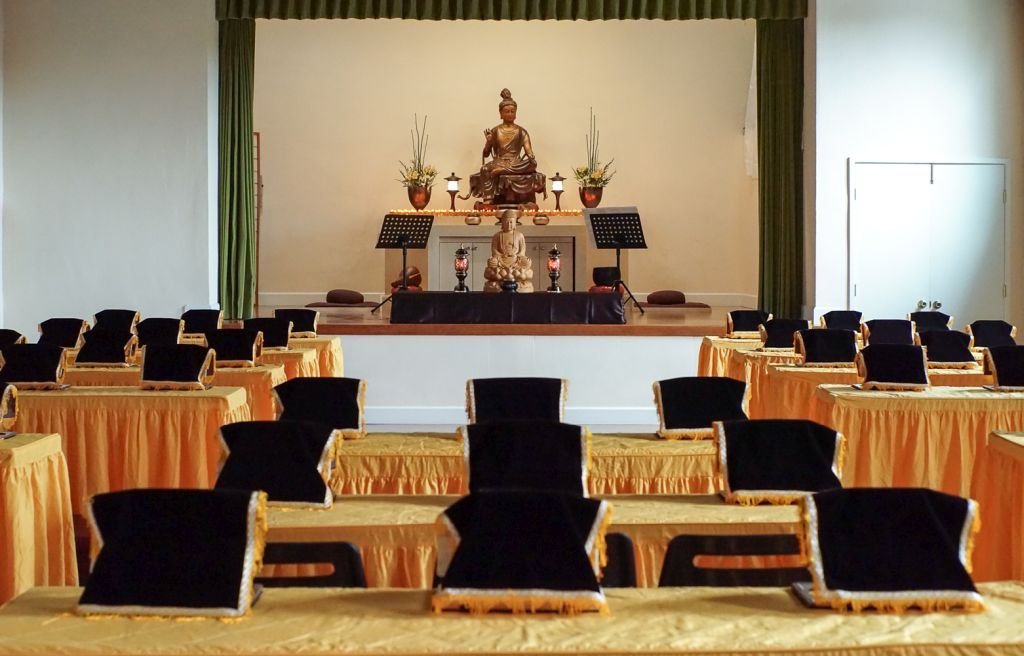
The Venerable encouraged us to rest using proper sitting posture in the Chan hall —back straight, chest slightly in, head balanced, chin tucked. During this time, no meditation method is applied; the purpose is simply to allow the body to relax and recover. Mentally, there’s no need to pressure yourself with thoughts like, “I should be practicing, how can I be sleeping?” In truth, there is no need to feel guilt. This kind of rest is distinct from the two previously mentioned: One involves poor posture, leading to drowsiness and an inability to restore energy. The other is indulgent, lazy, endless sleep.
If you fall asleep when sitting in the Chan hall while maintaining proper posture, this is not considered engaging in a meditation method, but your mind remains clear. Being in the Chan hall prevents you from becoming overly lax, and without the burden of guilt, you’re able to relax more fully. With correct posture, once your energy is sufficiently restored, you can immediately return to a focused state of practice.
Of course, there’s another important reason: people need to be allowed to sit and rest properly. Exhaustion—often built up over time—creates a genuine need for rest. We cannot simply force ourselves to “practice” when the body is no longer able to cooperate. If you habitually neglect or overwork your body, then during a Chan retreat, it will push back—it’s time for you to receive the karmic consequences. Continuing to force yourself in such a state won’t yield effective practice. However, if your mind remains clear and you’re resting with proper posture, that kind of rest is acceptable.
For example, if one day you enter the Chan hall and realize you’re very tired, you can try this approach: sit in meditation posture, but shift your focus from practicing a method to simply replenishing your energy. This rest, however, should not slip into unrestrained sleep. Maintain a clear mind and proper posture. When the mind is clear, wandering thoughts diminish, and with fewer wandering thoughts, genuine rest becomes possible.
At night, when we lie down to sleep, we should also apply a bit of method and sleep with a clear mind. What does that mean? It doesn’t mean staying awake, but rather avoiding the entanglement of chaotic, scattered thoughts. Don’t bring a restless, overactive mind into sleep. It’s best to sleep with a calm and settled mind. And if it’s not your usual time to sleep but you’re trying to meditate and feel very tired, you can still use this approach to rest.
You can also carry this mindful approach to rest into your nighttime sleep by avoiding excessive wandering thoughts. This is why, during evening meditation guidance, I encourage everyone to minimize the use of electronic devices after meditating and to head directly to bed. After meditating for some time, the mind is already in a relatively calm state, and it’s better to maintain that calmness as you transition into sleep.