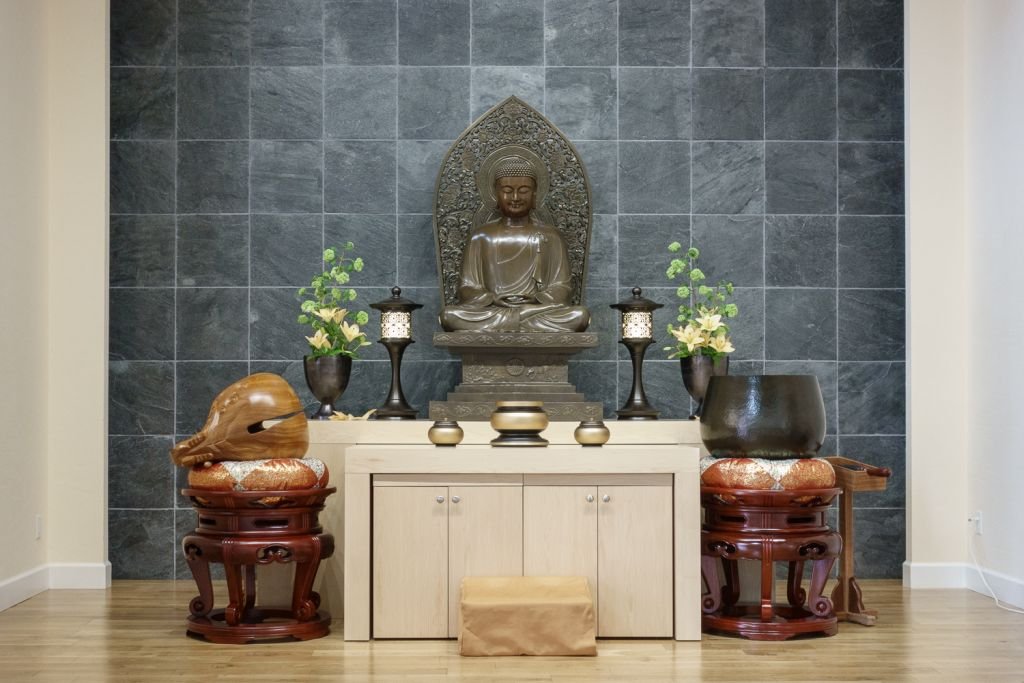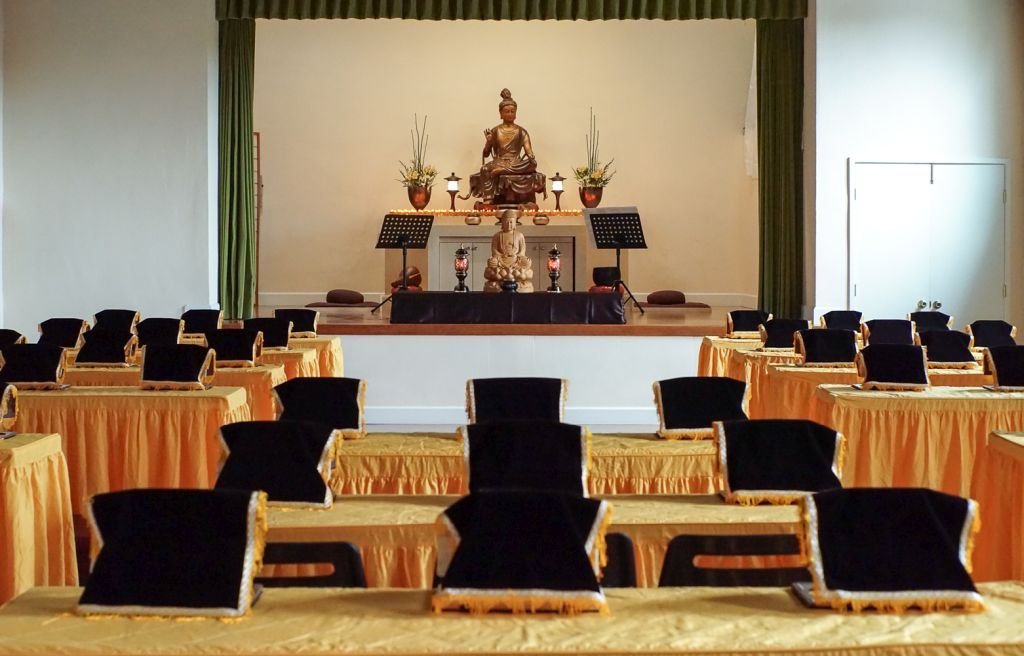

Chanting Buddha’s name meditation is mostly practiced in group settings because it requires vocal chanting, similar to the Seven-Day Chanting Retreat and group chanting sessions. The main difference is that one is with form and the other without. During the Seven-Day Chanting Retreat, participants hold a clear intention of being reborn in the Pure Land, which is with form. On the other hand, chanting Buddha’s name meditation, does not emphasize the idea of being reborn in the Pure Land, is without form. This doesn’t necessarily mean that people who are practicing meditation will not reach the Pure Land. In fact, as long as one makes vows regularly, meditation can help and ensure that they reach the Pure Land. It’s just that, in the moment of practicing chanting Buddha’s name meditation, one does not hold the specific intention of “I want to be born in the Pure Land.”
Regardless of the method used: chanting Buddha’s name, counting breaths, huatou, or counting while chanting Buddha’s name – these methods are often misunderstood. For example, if we hear of a patriarch who can recite Buddha’s name a 100,000 times a day, we naturally admire this and may want to emulate it. Reciting Buddha’s name 100,000 times a day means that no matter what I am doing, I would need to be reciting the Buddha’s name. While there’s nothing wrong with this idea, it can easily lead to the sound of “Amitabha, Amitabha, Amitabha” running in the background of our minds, always present no matter what we are doing. In fact, it may have become mechanical, that is, we mistakenly think that we are reciting the Buddha’s name anywhere at all times. We are not really reciting it with true intention, it has become merely a mechanical operation.
What does “mechanical” mean? A common analogy I use is the water pump, which is a kind of machinery. Once it’s connected to a power source and pipes, it runs automatically—filling as needed without requiring constant attention, allowing you to focus on other tasks. So what does it mean for a method to become mechanical? It’s similar to the concept of a water pump. You don’t have to take care of it, it will operate by itself. For instance, when chanting the Buddha’s name, it might feel automatic, like the faint sound of “Amitabha” playing subtly in the background of your mind—seemingly present yet absent. We may intentionally try to make chanting mechanical and take every opportunity to chant, because the patriarchs said we can recite 100,000 times a day. “How can I miss any opportunity to chant? I deliberately let it appear in my mind, automatically!” However, this is actually an incorrect approach because we are not truly engaged in the chanting consciously.
If the method of counting breaths becomes mechanical, this will become even more obvious. We don’t have to attend to our breathing, it counts automatically, and we can go work on other tasks. What do we work on? Indulge in wandering thoughts! I can have wandering thoughts and seemingly count the number of breaths at the same time, and then mistakenly think, “Yes, I’m counting my breath, it’s continuous and always there!” But at the same time, the wandering thought is also there. Since I don’t have to attend to my breathing and the number of breaths seems to run automatically, the main focus of our concentration is on the wandering thought, and that’s the drawback of becoming mechanical.
Mechanizing the chanting of Buddha’s name may not have much harm. At most, we are just not using the method. However, if counting of breath becomes mechanical, there will be significant consequences, as it will become controlling the breath. What does it mean to control the breath? When we count our breaths, we are breathing naturally and there’s no need to prescribe specific durations—such as inhaling for two seconds and exhaling for three. Real breathing isn’t predetermined in this way. Instead, it adjusts naturally to the body’s oxygen needs. For example, when we’re sitting still, our breathing is slower; while walking or running, it becomes shorter and faster. This adjustment happens naturally based on the body’s needs.
Of course, our mind and emotions also influence our breathing needs. When the mind is very stable and calm, the breathing is deep and slow. When our emotions are intense, our mind is very scattered, or when we have constant wandering thoughts, this is when more mental energy and oxygen are consumed, which may increase the frequency of breathing. Going back to the mechanical breathing that I just mentioned. If we force our breathing to maintain the same rhythm regardless of circumstances, the breathing frequency may not align with the body’s actual needs, leading to problems. For instance, breathing too much or too little may cause chest tightness, and prolonged tightness can result in headaches. When we consistently breathe incorrectly, we might not feel much at first, but these little flaws add a bit of pressure to our body, lungs, and head each time. Over time, as the flaws accumulate, that pressure gradually builds up, eventually making it hard to breathe, or causing chest tightness and headaches.
Therefore, whether it’s reciting the Buddha’s name, counting breaths, observing the breath, or contemplating on huatou, it’s important to be careful not to turn it into a mechanical process. First, it could have some negative effects on the body. Second, it’s not truly applying the method. If it becomes mechanical, it cannot go deeper because you don’t need to pay attention to it. You can engage in other activities or indulge in wandering thoughts, and that is not the correct way to use the method.